
Seveso disaster 1976
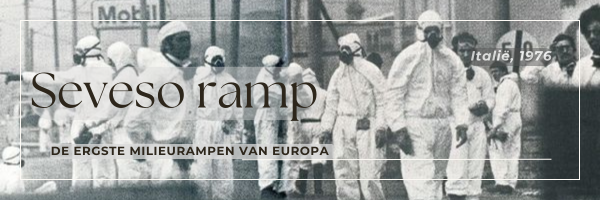
The facts: Who, What, Where
The Seveso disaster was a chemical accident that took place on 10 July 1976 in Seveso, Italy. It was one of the worst environmental disasters in Europe involving dioxin contamination.
Today it is considered a 'classic' example of poor risk management in the chemical industry.
The accident happened at the ICMESA chemical plant, owned by the Roche group, where herbicides and pesticides were produced. A malfunction in the reactor producing trichlorophenol led to an uncontrollable chemical reaction, releasing a cloud of highly toxic dioxin (2,3,7,8-tetrachlorodibenzo-p-dioxin, or TCDD).
Dioxin, an extremely toxic substance, settled over Seveso and nearby towns and contaminated the land, animals and water supply.
You may recognise the name dioxin from the dioxin food crises (Belgium in 1999 & Ireland in 2008) or from the dioxin poisoning of Viktor Yushchenko in 2004.
The company only reported the leak/release after a week. Evacuation only took place after 16 days.
What caused it (Chain of events)
1. Latent conditions (underlying issues)
- The production of TCP could generate 2,3,7,8-tetrachlorodibenzo-p-dioxin (TCDD), an extremely toxic dioxin, as a by-product.
- The plant had insufficient safety measures and was not designed to handle such substances safely.
2. Early warning signs
- There had been earlier temperature control problems and overheating in the reactors.
- The reactor had previously experienced failures, which is dangerous during an exothermic reaction.
- Operators were not trained to respond adequately to a sudden temperature rise.
3. Escalation factors
- The absence of an emergency cooling system.
- No design changes to mitigate known risks.
- No storage tanks or filters to limit emissions.
- The plant did not know how much dioxin (TCDD) was being formed, because it was not measured as standard.
- Plant management downplayed the danger.
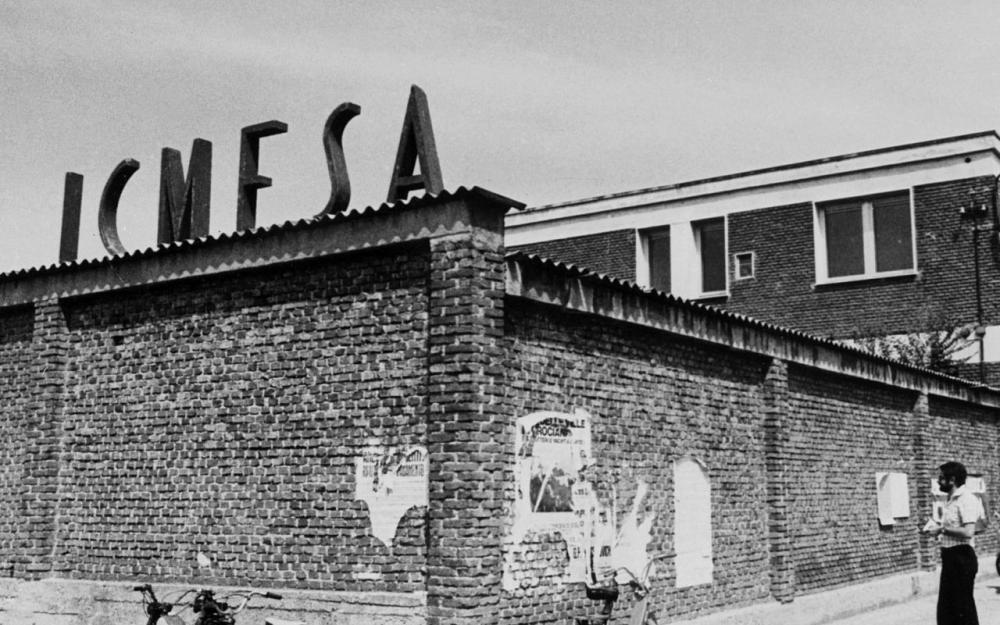 The ICMESA plant in Meda/Seveso, where the dioxin cloud was released on 10 July 1976.
4. Trigger event
- On the morning of 10 July 1976, a batch of TCP was being produced in reactor B.
- A power outage shut down the stirring system and the temperature began to rise.
- Operators stopped the reaction without properly cooling the system, creating a dangerous thermal runaway.
- The heat caused overpressure in the reactor, and around 12:37 a safety valve opened.
- This resulted in an uncontrolled gas cloud containing a mix of trichlorophenol and dioxin (TCDD).
Impact
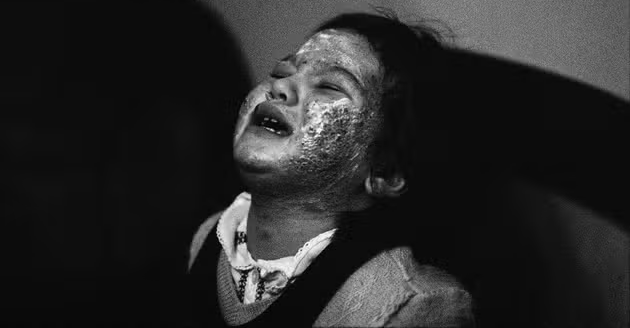 Children in the region developed chloracne and other skin conditions from exposure to TCDD dioxin.
5. The disaster
At first nobody realised the severity of the situation, because the gas cloud did not cause an immediate explosion or fire.
Within a few days, animals in the region began to die in large numbers and residents developed skin problems such as chloracne.
There was no emergency plan for chemical incidents in Seveso or the surrounding villages. Untrained emergency services did not know how to handle the situation.
It was not until 14 July that the plant admitted there had been a chemical leak. Only on 19 July did the authorities officially acknowledge that highly toxic substances had been released. Evacuations did not begin until 26 July — 16 days after the disaster. This slow response led to social unrest (loss of trust and protests).
Ultimately no immediate fatalities were reported, but the long-term health effects proved very serious. More than 3,000 animals died within days of the release and more than 80,000 animals were culled to prevent contamination of the food supply.
Skin conditions such as chloracne (a severe acne-like condition) affected hundreds of people. In the following years there was an increase in cancer, birth defects and reproductive issues. About 600 residents were eventually evacuated and a large area was permanently sealed off due to contamination. The clean-up took years, with contaminated soil and waste encapsulated in concrete and removed.
What has happened since?
6. Aftermath and consequences
After years of litigation, individuals were eventually held responsible for the disaster. In 1983, 12 people — including ICMESA directors and technicians — were charged with negligence and causing environmental damage. Five of them (including two directors) received suspended prison sentences and fines.
According to the judges, ICMESA management had taken insufficient safety measures and failed to raise the alarm in time. They downplayed the severity of the toxic release, especially regarding dioxin (TCDD). This did not lead to direct legal consequences for the company itself, but it was ultimately shut down.
Parent company Hoffmann-La Roche (Switzerland) was the owner of ICMESA and carried indirect responsibility. It paid millions in damages, but tried to limit its legal liability as much as possible.
The contaminated area was eventually cleaned up, and today a park (Bosco delle Querce, the Seveso Oak Forest) stands where the disaster occurred.
The Seveso directives
The disaster led to stricter European regulation for the handling and storage of toxic chemicals: the now well-known Seveso directives. The Seveso I directive was introduced by the European Economic Community (EEC) on 24 June 1982 to prevent and control similar industrial accidents. Since then, the European Commission tracks chemical incidents in the so-called Minerva dashboard.
Seveso I directive (1982)
The aim of the directive was to improve the prevention and control of industrial accidents involving dangerous substances. It required companies handling large quantities of hazardous chemicals to implement safety measures, risk assessments and emergency plans.
Seveso II directive (1996)
Adopted on 9 December 1996 and entered into force in 1999. Seveso II was deemed necessary following the disasters in Bhopal (1984) and Basel (1986). It focused mainly on introducing stricter safety requirements and on preventive measures rather than purely reactive emergency response. Companies had to submit safety reports, conduct land-use planning and improve public access to information about hazardous sites.
Seveso III directive (2012)
Adopted on 4 July 2012 and entered into force on 1 June 2015. Updated chemical classification based on the EU's CLP regulation. Better access to public information, improved inspection and enforcement by national authorities, and greater attention to land-use planning to reduce the risks of hazardous sites near residential areas.
BRZO-2015
The Dutch BRZO-2015 regulation was a transposition of the Seveso III directive. With the new Environment and Planning Act (Omgevingswet) taking effect in 2024, the term Seveso has been fully introduced into Dutch legislation and the term BRZO has been phased out.
About Capptions
Capptions helps Seveso and ARIE-regulated companies across Europe effortlessly comply with the Environment and Planning Act and the Seveso directives, so they are always in compliance and proactively manage risk. More info on Seveso.app
Sources
https://www.dg-360.nl/seveso-ramp-1976/
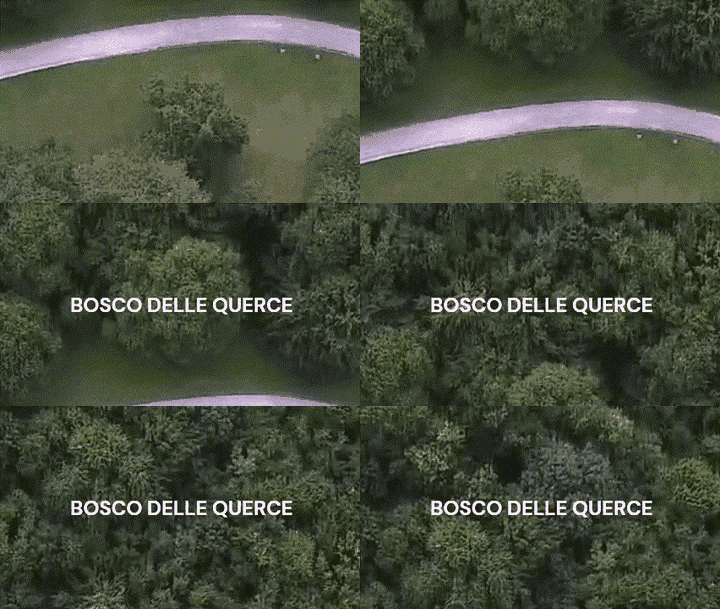 The Bosco delle Querce ('Oak Forest'), planted on the most heavily contaminated area (Zone A) after the polluted soil was excavated and buried.